Manufacturing, Engineering & Supply Chain Fact-Checked UK 2026 Playbook Search Intent & AI Search (GEO) Ready
Supply Chain Leads: Top 20 UK Strategies, Benchmarks & Staged Growth System
Executive Summary & Direct Answer (2026 UK Benchmark)
Generating high-converting supply chain leads in the UK in 2026 requires a staged, foundation-first approach. Rather than competing in price wars on shared directories or sending £6.40/click paid traffic to a slow brochure site, top-performing supply chain firms start with a sub-second static HTML website built for exact UK search intent (Specialist Supply Chain Advisory) and AI Search (GEO), demonstrate compliance with ISO 9001 / ISO 14001, and layer on targeted SEO clusters, Google Search PPC, and 24/7 AI lead screening as their pipeline scales.
Generating high-converting supply chain leads in the UK in 2026 requires a staged, foundation-first approach. Rather than competing in price wars on shared directories or sending £6.40/click paid traffic to a slow brochure site, top-performing supply chain firms start with a sub-second static HTML website built for exact UK search intent (Specialist Supply Chain Advisory) and AI Search (GEO), demonstrate compliance with ISO 9001 / ISO 14001, and layer on targeted SEO clusters, Google Search PPC, and 24/7 AI lead screening as their pipeline scales.
Top 20 Specific Tips for Generating Supply Chain Leads in the UK (2026)
Ordered by commercial ROI: we start with Website & Search Intent Foundations (Tips 1–5) and AI Search / GEO Visibility (Tips 6–10) before layering on Sector Outbound (Tips 11–15) and Paid & AI Conversion Systems (Tips 16–20). Tips 1–5 are expanded below by default—use the filter tabs or click any tip to view its full implementation checklist.
1Website & Search Intent Foundations
Foundation #1
Build Dedicated Search-Intent Service Pages for High-Margin Supply Chain Niches
In 2026, UK buyers searching for Supply Chain solutions rarely convert on a generic 'Services' page. Whether your target buyer is among Operations Directors, Procurement Managers, Chief Engineers, Supply Chain Directors, Quality Assurance Heads, and Technical Buyers, they search with commercial specificity—matching high-margin niches such as Specialist Supply Chain Advisory, Retainer Packages, and Enterprise Contracts and compliance standards (ISO 9001 / ISO 14001, UKCA Marking, HSE Workplace Regulations, UKAS Accreditation, FSA / HACCP, and UK GDPR).
Before spending budget on ads or directories like www.alooba.com, structure your website with dedicated static HTML landing pages for each high-margin sub-service so every visitor lands on a page built for their exact search intent.
Implementation Playbook:
Create separate URLs for high-margin sub-services (Specialist Supply Chain Advisory, Retainer Packages, and Enterprise Contracts)
Target commercial UK search queries such as 'Supply Chain leads UK' and 'best Supply Chain lead generation'
State who you serve (Operations Directors, Procurement Managers, Chief Engineers, Supply Chain Directors, Quality Assurance Heads, and Technical Buyers) and typical project scope (£15,000 – £180,000+ annual supply or engineering contract) in the first 80 words
Display UK regulatory credentials and trust signals (ISO 9001 / ISO 14001, UKCA Marking, HSE Workplace Regulations, UKAS Accreditation, FSA / HACCP, and UK GDPR) above the fold
UK Benchmark: Dedicated search-intent service pages convert UK B2B visitors at 4.8% vs. 1.3% on generic brochure websites.
2Website & Search Intent Foundations
Positioning
Define Your Ideal Supply Chain Prospect Profile
Success in supply chain lead generation starts with laser-focused targeting. The sector encompasses diverse verticals—from manufacturing and retail to healthcare and automotive—each with unique pain points, regulatory requirements, and procurement cycles. Define your ICP by company size, industry vertical, annual supply chain spend, tech stack maturity, and specific challenges you solve.
Use Lusha to enrich prospect data with accurate contact information for supply chain directors and procurement managers. Map out decision-making units: whilst procurement managers initiate searches, CFOs approve budgets, and operations directors evaluate implementations. Understanding this matrix is crucial for multi-threaded engagement.
Implementation Playbook:
Segment by supply chain maturity: reactive vs. strategic vs. digital-first organisations
Analyse industry trends: nearshoring, circular economy, supply chain visibility demands
3Website & Search Intent Foundations
High ROI
Replace Generic 'Contact Us' Forms with an Interactive Supply Chain Scope & ROI Calculator
Decision-makers researching Supply Chain providers are hesitant to submit a blank contact form that just says 'We will call you back.' They want immediate commercial clarity—pricing brackets across Specialist Supply Chain Advisory, timescales, or compliance readiness.
Adding a 4-step interactive quote estimator or diagnostic scorecard on your core pages captures 3x more enquiries while automatically qualifying budget and timeline before your sales team picks up the phone.
Deliver an instant benchmark estimate or readiness score on-screen and via automated email
Route high-value enquiries straight to a live calendar booking page (/book-a-call)
Tag lower-tier enquiries into an automated educational email sequence
UK Benchmark: Interactive scope estimators increase B2B landing page enquiry rates by 140%–210% across UK service sectors.
4Website & Search Intent Foundations
Quick Win
Engineer Sub-Second Mobile Speed (100/100 Lighthouse) to Stop Leaking £6.40 Clicks
With UK Google Ads CPCs in the Supply Chain sector averaging £6.40 per click, every second of page load delay destroys your return on ad spend. Legacy CMS themes loaded with 30+ plugins routinely take 3.5 to 5 seconds to render on mobile.
Rebuilding on clean, pre-rendered Static HTML deployed on a global edge CDN ensures instant Largest Contentful Paint (LCP under 0.6s)—improving both Google Quality Scores and conversion rates.
Implementation Playbook:
Audit your core landing pages against Google Core Web Vitals (LCP, INP, CLS)
Serve all hero and case-study imagery in next-gen WebP format with explicit dimensions
Remove render-blocking third-party scripts and heavy visual page builders
Test mobile thumb-zone CTA visibility across iOS and Android viewports
UK Benchmark: Every 1-second improvement in mobile load speed increases B2B conversion rates by up to 27%.
5Website & Search Intent Foundations
Conversion
Structure Your Supply Chain Pages for ChatGPT, Perplexity & Google AI Overviews (GEO)
Over 38% of UK B2B buyers now ask ChatGPT, Perplexity, Claude, or Google AI Overviews to shortlist Supply Chain providers (especially for Specialist Supply Chain Advisory, Retainer Packages, and Enterprise Contracts) before clicking a traditional search result. LLMs extract structured facts, entity relationships, and verifiable citations.
To get your business recommended by AI search engines, your site needs semantic HTML5 hierarchy, Direct Answer summary blocks under every H2 heading, and an /llms.txt index file at your domain root.
Implementation Playbook:
Place a 60–80 word factual 'Direct Answer' block at the top of each Supply Chain guide and service page
Publish a clean /llms.txt file summarising your core services, UK coverage, pricing tiers, and credentials
Include hard numbers, regulatory citations (ISO 9001 / ISO 14001), and named UK case studies that LLMs can verify
Ensure AI crawlers (GPTBot, PerplexityBot, ClaudeBot, Google-Extended) are allowed in robots.txt
UK Benchmark: B2B websites engineered with GEO schema and /llms.txt see 3.4x higher citation frequency in AI search responses.
6AI Search (GEO) & Local Authority
AI Search / GEO
Structure Your Supply Chain Pages for ChatGPT, Perplexity & Google AI Overviews (GEO)
Over 38% of UK B2B buyers now ask ChatGPT, Perplexity, Claude, or Google AI Overviews to shortlist Supply Chain providers (especially for Specialist Supply Chain Advisory, Retainer Packages, and Enterprise Contracts) before clicking a traditional search result. LLMs extract structured facts, entity relationships, and verifiable citations.
To get your business recommended by AI search engines, your site needs semantic HTML5 hierarchy, Direct Answer summary blocks under every H2 heading, and an /llms.txt index file at your domain root.
Implementation Playbook:
Place a 60–80 word factual 'Direct Answer' block at the top of each Supply Chain guide and service page
Publish a clean /llms.txt file summarising your core services, UK coverage, pricing tiers, and credentials
Include hard numbers, regulatory citations (ISO 9001 / ISO 14001), and named UK case studies that LLMs can verify
Ensure AI crawlers (GPTBot, PerplexityBot, ClaudeBot, Google-Extended) are allowed in robots.txt
UK Benchmark: B2B websites engineered with GEO schema and /llms.txt see 3.4x higher citation frequency in AI search responses.
7AI Search (GEO) & Local Authority
AI Search / GEO
Deploy Connected JSON-LD Entity Graphs (Organization, Service & FAQPage Schema)
Search engines and AI models rely on Schema.org structured data to verify who you are, what accreditations you hold (ISO 9001 / ISO 14001, UKCA Marking, HSE Workplace Regulations, UKAS Accreditation, FSA / HACCP, and UK GDPR), and what commercial terms you offer. Disconnected or missing schema leaves Google guessing.
Implement a unified @graph JSON-LD block on your Supply Chain pages linking your Organization, Service, BreadcrumbList, and FAQPage entities with @id references and verifiable sameAs links.
Implementation Playbook:
Declare explicit areaServed ('United Kingdom' + key regional hubs) and audience types in Service schema
Mark up real 'People Also Ask' questions in FAQPage schema to win expanded SERP real estate
Link your Companies House registration and regulatory memberships via sameAs properties
Validate zero warnings in Google Rich Results Test and Schema Markup Validator
UK Benchmark: Connected JSON-LD entity graphs improve rich-snippet eligibility and semantic keyword rankings by 24%.
8AI Search (GEO) & Local Authority
Authority
Leverage Account-Based Marketing for Enterprise Supply Chain Accounts
Supply chain deals often involve six-figure contracts and 9-12 month sales cycles. ABM allows you to orchestrate coordinated campaigns targeting key accounts with personalised content, multi-channel touchpoints, and executive-level engagement. Identify high-value target accounts based on firmographic data, supply chain spend, and digital transformation readiness.
Use Apollo.io to build targeted account lists and track engagement across your buying committee. Implement ActiveCampaign for personalised email nurturing sequences tailored to each stakeholder's role and concerns.
Implementation Playbook:
Create account-specific value propositions addressing their unique supply chain challenges
Develop custom ROI calculators showing potential cost savings, efficiency gains, and payback periods
Execute coordinated outreach across LinkedIn, email, direct mail, and targeted display advertising
Align sales and marketing on account engagement strategies and handoff protocols
Track account-level engagement signals to optimise timing and messaging
UK Benchmark: Industry Insight: ABM campaigns targeting supply chain enterprises deliver 208% higher marketing ROI compared to broad-based approaches, according to B2B Marketing UK benchmarking data.
9AI Search (GEO) & Local Authority
Local SEO
Implement Visitor Identification to Capture Anonymous Supply Chain Leads
The majority of your website visitors never fill out forms, yet many are actively researching supply chain solutions. Visitor identification tools reveal which companies are browsing your website, what content they're consuming, and how frequently they return—enabling your sales team to prioritise warm outreach to prospects already demonstrating buying intent.
Deploy Dealfront/Leadfeeder to identify companies visiting your supply chain solution pages, track their content consumption patterns, and receive alerts when target accounts show heightened engagement. This transforms anonymous website traffic into actionable sales intelligence.
Implementation Playbook:
Identify companies viewing pricing pages, case studies, or technical documentation—strong buying signals
Track repeat visitors from target accounts, indicating increasing interest or internal evaluation processes
Alert sales teams when high-value accounts visit your site, enabling timely, contextual outreach
Analyse which content resonates most with different supply chain verticals to optimise your content strategy
Build remarketing audiences based on specific page visits or content downloads for targeted advertising
10AI Search (GEO) & Local Authority
Foundation
Publish Quantified UK Case Studies Showing Before/After Metrics for Operations Directors
When prospective buyers evaluate Supply Chain providers across Specialist Supply Chain Advisory, Retainer Packages, and Enterprise Contracts, vague claims of 'high quality service' are ignored. Both human buyers and AI search algorithms look for documented proof: baseline problem, technical intervention, compliance adherence, and measurable outcome.
Structure every case study around a clear financial or operational metric relevant to £15,000 – £180,000+ annual supply or engineering contract engagements, and embed summary proof cards directly onto your main service pages.
Implementation Playbook:
Follow a strict 4-part structure: Client Sector & Challenge, Compliance/Technical Scope, Delivery Timeline, Quantified ROI
Include named client quotes or verified anonymised sector descriptors (e.g., '£14m Midlands Enterprise')
Highlight how you navigated sector standards (ISO 9001 / ISO 14001, UKCA Marking, HSE Workplace Regulations, UKAS Accreditation, FSA / HACCP, and UK GDPR) without operational disruption
Cross-link each case study to the exact service page it validates
UK Benchmark: Pages with embedded quantified case study cards convert 64% more high-ticket enquiries than pages with generic testimonials.
11Sector Authority, Partnerships & Outbound
High ROI
Use Companies House & UK Trigger Events to Time Your Supply Chain Outreach
Cold outreach fails when it arrives at a random time with a generic pitch. In the UK Supply Chain market, buying windows open immediately after specific corporate trigger events: newly appointed directors, funding rounds, office expansions, regulatory deadlines, or group restructures.
Monitoring Companies House filings, trade press, and LinkedIn job changes lets your team contact Operations Directors, Procurement Managers, Chief Engineers, Supply Chain Directors, Quality Assurance Heads, and Technical Buyers within 48 hours of a trigger event—when they are actively reviewing suppliers.
Implementation Playbook:
Track new director appointments (especially CFO, COO, Operations, or Compliance heads) via Companies House APIs
Monitor sector expansion signals such as new job postings, commercial property leases, or grant awards
Reference the exact trigger and relevant UK standard (ISO 9001 / ISO 14001, UKCA Marking, HSE Workplace Regulations, UKAS Accreditation, FSA / HACCP, and UK GDPR) in your first two sentences
Direct outreach prospects to a bespoke static landing page built for their specific sector
UK Benchmark: Trigger-based UK B2B outreach achieves 18%–26% positive reply rates compared to under 2% for untargeted cold blasts.
12Sector Authority, Partnerships & Outbound
LinkedIn B2B
Establish Supply Chain Thought Leadership Through Content Marketing
Supply chain decision-makers conduct extensive research before engaging vendors—typically consuming 5-7 pieces of content before taking a sales meeting. Position your organisation as a trusted advisor by publishing data-driven insights, industry trend analysis, regulatory guidance, and practical implementation frameworks that demonstrate deep supply chain expertise.
Create comprehensive content assets including whitepapers on supply chain resilience, case studies showcasing measurable outcomes, webinars featuring industry experts, and podcast series interviewing supply chain leaders. Use Pictory to repurpose written content into engaging video formats for LinkedIn and YouTube.
Implementation Playbook:
Publish original research: UK supply chain benchmarking reports, technology adoption surveys, cost analysis studies
Develop interactive tools: supply chain maturity assessments, ROI calculators, total cost of ownership models
Optimise content for search visibility around high-intent queries like "supply chain management software UK" or "warehouse automation solutions"
13Sector Authority, Partnerships & Outbound
Partnerships
Offer High-Value Supply Chain Lead Magnets
Supply chain professionals are data-driven and appreciate practical resources that deliver immediate value. Create compelling lead magnets that address specific pain points: cost reduction opportunities, efficiency improvement frameworks, regulatory compliance checklists, or vendor selection criteria. These assets should demonstrate your expertise whilst capturing contact information from engaged prospects.
Effective lead magnets include supply chain cost benchmarking reports, warehouse efficiency audit templates, procurement process optimisation guides, or sustainability reporting frameworks. Use Brevo to deliver lead magnets instantly via automated email whilst triggering appropriate nurture sequences based on download behaviour.
Provide templates: RFP frameworks, vendor evaluation scorecards, implementation project plans
14Sector Authority, Partnerships & Outbound
Trust & Video
Master LinkedIn for Supply Chain Professional Networking
LinkedIn generates 4 out of 5 B2B leads from social media, making it indispensable for supply chain lead generation. Supply chain professionals are highly active on the platform—procurement directors, logistics managers, and operations executives use LinkedIn to research solutions, follow industry trends, and evaluate potential vendors.
Optimise your company page and personal profiles with supply chain-relevant keywords. Utilise LinkedIn Sales Navigator to identify and engage target prospects. Leverage Reply.io for coordinated LinkedIn and email outreach sequences that respect platform guidelines whilst maintaining personalisation at scale.
Implementation Playbook:
Join and actively participate in supply chain LinkedIn groups: UK Supply Chain Forum, Logistics UK, CIPS community
Share valuable insights consistently: comment thoughtfully on industry news, provide expert perspectives on emerging trends
Use LinkedIn Articles to publish long-form thought leadership content directly on the platform
Run targeted LinkedIn Ads focused on job titles like "Supply Chain Director," "Procurement Manager," or "Operations VP"
Implement social selling training for your sales team to build authentic relationships, not just broadcast messages
UK Benchmark: 85% of UK B2B marketers consider lead generation their most important marketing goal, with LinkedIn being the primary channel for reaching supply chain decision-makers.
15Sector Authority, Partnerships & Outbound
Account-Based
Showcase Supply Chain Success Stories and Social Proof
Supply chain investments carry significant risk—implementation complexity, change management challenges, and substantial financial commitments make decision-makers cautious. Detailed case studies demonstrating measurable outcomes with recognisable brands provide the social proof necessary to overcome scepticism and accelerate buying decisions.
Develop comprehensive case studies that quantify results: percentage improvement in order accuracy, cost reduction achieved, inventory turnover improvements, or delivery speed enhancements. Feature testimonials from supply chain directors, procurement managers, and operations executives at similar organisations to your prospects. Use Descript to create professional video testimonials that humanise your success stories.
Implementation Playbook:
Quantify business impact: "Reduced warehousing costs by 23% for leading UK retailer" or "Improved on-time delivery from 82% to 97%"
Feature industry-specific examples: manufacturing supply chains face different challenges than retail or healthcare
Include video testimonials from supply chain leaders describing their evaluation process and results achieved
Create short-form success snapshots for social media: before/after metrics, visual data representations, client quotes
16Paid Acquisition & AI Conversion Systems
Scale
Only Scale Google Search PPC Once Your Supply Chain Website Converts at 3.5%+
Running Google Ads before fixing your website's search intent and load speed is the fastest way to burn budget in Supply Chain. With UK clicks costing around £6.40, sending paid traffic to a slow homepage results in £250+ cost-per-lead.
Follow the Staged Growth rule: validate your static landing page conversion rate organically first, then launch tightly themed Exact and Phrase match Google Search campaigns targeting bottom-of-funnel commercial intent.
Implementation Playbook:
Bid on high-intent commercial keywords ('Supply Chain company UK', 'Supply Chain leads UK') rather than broad informational terms
Maintain an aggressive negative keyword list (blocking 'jobs', 'courses', 'free templates', 'salary', 'DIY')
Match every ad group 1:1 to a dedicated static HTML landing page for 8/10 to 10/10 Quality Scores
Track offline CRM deal closures back into Google Ads via Enhanced Conversions
UK Benchmark: Pairing high-intent PPC with dedicated static HTML landing pages reduces UK cost-per-acquisition by 41%.
17Paid Acquisition & AI Conversion Systems
AI Automation
Deploy a 24/7 AI Screening & Speed-to-Lead Agent to Qualify Enquiries Under 60 Seconds
In competitive UK sectors like Supply Chain, buyers typically enquire with 2 to 3 providers simultaneously. The firm that responds within 60 seconds wins up to 73% of the business—yet most teams take 4 to 24 hours to reply to web forms.
Once your website foundation is generating steady traffic, add an AI qualification agent via web chat, SMS, and email that answers initial technical/compliance questions (ISO 9001 / ISO 14001, UKCA Marking, HSE Workplace Regulations, UKAS Accreditation, FSA / HACCP, and UK GDPR) and books qualified prospects straight into your diary.
Implementation Playbook:
Trigger an instant SMS and email acknowledgement within 30 seconds of any form submission
Train your website AI assistant on your exact Supply Chain pricing brackets, coverage areas, and FAQs
Automatically screen out low-budget or out-of-area enquiries politely
Sync qualified bookings directly into your CRM (HubSpot, Pipedrive, Close) with full transcript context
UK Benchmark: Responding to B2B web enquiries within 1 minute increases qualification-to-appointment conversion by 391%.
18Paid Acquisition & AI Conversion Systems
Nurture ROI
Utilise AI-Powered Personalisation for Supply Chain Outreach at Scale
Supply chain lead generation requires personalised engagement across dozens or hundreds of prospects simultaneously—a challenge when each organisation has unique operational contexts, pain points, and priorities. AI-powered sales tools analyse prospect data, company information, and industry trends to generate contextually relevant outreach messages that feel individually crafted whilst maintaining scale.
Implement AISDR for AI-driven sales outreach that personalises messages based on prospect industry, company size, tech stack, and recent company news. Use Apollo.io to identify supply chain prospects showing active buying intent through online research behaviour and content consumption patterns.
Implementation Playbook:
Reference recent company announcements: facility expansions, sustainability initiatives, or market expansions
Connect your solution to industry-specific challenges: Brexit logistics complexity for importers, last-mile delivery for retailers
Personalise based on tech stack: integration capabilities with their existing ERP, WMS, or TMS platforms
Adjust messaging based on company growth stage: startups need scalability, enterprises need enterprise-grade security
Time outreach based on buying signals: funding announcements, executive hires, facility openings, or quarterly earnings calls
UK Benchmark: Best Practice: AI-powered personalisation increases email response rates by 142% compared to generic outreach, according to sales engagement benchmarking data.
Supply chain decision-makers engage with potential solutions across multiple touchpoints before making contact—they research on LinkedIn, read industry publications, attend webinars, consume vendor content, and seek peer recommendations. A multi-channel approach ensures your message reaches prospects wherever they're actively researching, increasing touchpoint frequency and brand familiarity.
Orchestrate coordinated campaigns across email, LinkedIn, targeted display advertising, industry publication sponsorships, trade show participation, and direct mail for high-value accounts. Use ClickUp to coordinate campaign execution across teams and channels, ensuring consistent messaging and timing.
Implementation Playbook:
Email nurture sequences: educational content progressively introducing your solution's capabilities and benefits
LinkedIn engagement: organic content sharing, targeted ads, and personalised connection requests from relevant team members
Industry publication advertising: Supply Chain Management Review, Logistics Manager, or Procurement Leaders
Webinar series: invite industry experts to discuss supply chain trends, positioning your solution as the enabling technology
Trade show participation: UK logistics and supply chain events like IMHX, Multimodal, or Procurex for face-to-face engagement
20Paid Acquisition & AI Conversion Systems
High ROI
Build a Compounding Topic Cluster Around Real UK 'People Also Ask' Queries
Single service pages capture bottom-of-funnel buyers, but capturing prospects 30–60 days earlier requires answering the specific commercial questions they research—such as cost comparisons across Specialist Supply Chain Advisory, Retainer Packages, and Enterprise Contracts, UK regulatory checklists, and ROI timelines.
Using live DataForSEO UK SERP data and our Artemis AI 13-stage research system, publish 10 interlinked authority articles around your core Supply Chain hub page so every article passes internal link equity and routes readers to your conversion engine.
Implementation Playbook:
Publish transparent UK pricing & cost breakdown guides for Supply Chain in 2026
Create compliance checklists addressing ISO 9001 / ISO 14001, UKCA Marking, HSE Workplace Regulations, UKAS Accreditation, FSA / HACCP, and UK GDPR for Operations Directors, Procurement Managers, Chief Engineers, Supply Chain Directors, Quality Assurance Heads, and Technical Buyers
Link every cluster article back to your core commercial service page with descriptive anchor text
Refresh benchmark stats quarterly to maintain top Google and AI Overview rankings
UK Benchmark: A 10-article search-intent topic cluster typically increases core service page organic traffic by 165% within 90 days.
Why Tips 1–10 Always Come First
Need a Supply Chain Website Engineered for Search Intent & AI Search?
We build ultra-fast static HTML websites from £300 (+£50/mo) via our AI Agents Club or bespoke Conversion Engines from £1,000+—then add paid systems & AI only once your foundation is converting.
Before investing in paid clicks or third-party lead brokers, review how UK supply chain acquisition channels perform across cost-per-lead, close rate, and website foundation speed.
2026 UK Supply Chain Lead Channel Benchmark: Cost Per Lead vs. Close Rate
Based on live UK search CPCs (£6.40 avg. click) and SME conversion benchmarks
Owned Static Website + AI Search (GEO) Best Long-Term ROIAvg CPL: £25 | Close Rate: 28%
High-Intent Google Search PPC (On Static LP) Fastest Scalable VolumeAvg CPL: £75 | Close Rate: 19%
Targeted UK B2B Outbound + Trigger Events Best for Enterprise ABMAvg CPL: £70 | Close Rate: 14%
Shared Lead Directories / Aggregators (Sold to 3–5 Firms) Lowest Margin / Price WarAvg CPL: £55 | Close Rate: 6%
Key Takeaway: Shared lead directories appear cheap per lead (£55), but because enquiries are sold to up to 5 competitors simultaneously, close rates average just 6%—making your effective Cost Per Signed Client 3.8x higher than an owned Search-Intent & GEO website.
Why Website Foundations Come First: Same 1,000 UK Visitors, 3.4x More Supply Chain Enquiries
Why we fix your website foundation before turning on paid traffic
Typical Slow CMS / Brochure Site (3.8s Load, Weak Intent)
1000
Visitors
380
Stay >5s
14
Enquiries
2
New Clients
HelloLeads Static HTML + GEO Engine (0.4s Load, Intent-Matched)
1000
Visitors
790
Stay >5s
48
Enquiries
11
New Clients
Same traffic, 3.4x more enquiries: Sub-second static HTML + exact search-intent copy stops 60%+ mobile bounce loss immediately.
12-Month Staged Website & Lead Growth Curve (Volume vs. Blended CPL)
Bars = Monthly Qualified Enquiries | Green Line = Blended Cost Per Lead (£)
UK Search Intent & Regulatory Profile
Live UK search demand & buyer verification signals for Supply Chain
Key 2026 UK Accreditations & Compliance Signals: ISO 9001 / ISO 14001, UKCA Marking, HSE Workplace Regulations, UKAS Accreditation, FSA / HACCP, and UK GDPR
High-Margin UK Sub-Niches to Target: Specialist Supply Chain Advisory, Retainer Packages, and Enterprise Contracts
Typical UK Contract Value: £15,000 – £180,000+ annual supply or engineering contract
The HelloLeads Staged Growth Architecture
We Build Your Website for Search Intent & AI Search First—Then Scale Paid & AI Systems as You Grow
Why pay £2,000/month in agency retainers or ad spend before your website can convert the traffic? Our staged model keeps your upfront cost low while building a permanent asset—then layers on SEO velocity, paid acquisition, and AI automation only when your current stage is proven and profitable.
Stage 1 • Foundations First
Search Intent & AI Search Website Build
We replace slow, generic brochure sites with a 100/100 Lighthouse pure Static HTML website engineered around UK supply chain search intent and AI citation architecture.
£300 one-off (+£50/mo)
Starter Static via AI Agents Club • Or £1,000+ Full Conversion Engine
Built for UK Search Intent: Dedicated pages matching exact buyer queries & ISO 9001 / ISO 14001 trust signals.
AI Search (GEO) Ready: Connected JSON-LD schema, Direct Answer blocks, and /llms.txt for ChatGPT & Google AI.
100/100 Lighthouse Speed: Hosted on global edge CDN with SSL, technical SEO & monthly content included in the £50/mo plan.
Zero Lock-In: You own your website and domain from day one.
Once your foundational pages are live and validating audience intent, we compound your organic & AI search footprint across every high-margin supply chain keyword cluster.
£150 for 10 AI SEO Articles
Or £1,500 – £3,500 for Full Existing-Site GEO Rebuilds
Artemis 13-Stage AI Content: Research-backed UK authority articles targeting real DataForSEO "People Also Ask" queries (£150 for 10 or £20 single).
Synaptic GEO Audits (£1,500): Full entity-graph and LLM retrieval overhaul for established UK websites.
Interactive Lead Magnets: Custom supply chain ROI calculators & diagnostic scorecards that double conversion rates.
Compounding Traffic: Drives blended cost-per-lead down every month without increasing ad spend.
With a website converting visitors at 4.8%+, every pound of paid traffic works 3x harder. We layer on paid search, exclusive leads, and 24/7 AI screening systems as required.
From £750/mo or Pay-Per-Lead
Scaled strictly to your pipeline capacity & target CPA
High-Intent PPC Management: Exact-match Google & LinkedIn campaigns pointed at dedicated static landing pages (from £750/mo).
24/7 AI Qualification Agents: Instant web-chat & SMS speed-to-lead routing that books qualified supply chain calls into your calendar.
B2B Outbound & Exclusive Leads: Multi-channel PECR-compliant outreach and exclusive trade lead supply.
Closed-Loop CRM Attribution: Track every pound from click to signed £15,000 contract.
How UK Buyers Shortlist Supply Chain Suppliers in Google & AI Search
When Operations Directors, Procurement Managers, Chief Engineers, Supply Chain Directors, Quality Assurance Heads, and Technical Buyers look for a supply chain partner today, they don't just click the first Google Ad. They compare providers across Google Search, AI Answer Engines (ChatGPT, Perplexity, Google AI Overviews), and regulatory registries (ISO 9001 / ISO 14001).
Architecture Layer
Legacy Brochure Website
HelloLeads Search-Intent + GEO Site
Mobile Load Speed
3.5s – 5.2s (Heavy CMS plugins)
0.4s Pure Static HTML (100/100)
Search Intent Match
Generic "Services" bullet list
Dedicated niche & UK regional pages
AI Search (ChatGPT / GEO)
Invisible (Unstructured DOM)
JSON-LD @graph + /llms.txt + Direct Answers
Enquiry Conversion Rate
1.1% – 1.6%
4.5% – 6.2% (Interactive Scope Flows)
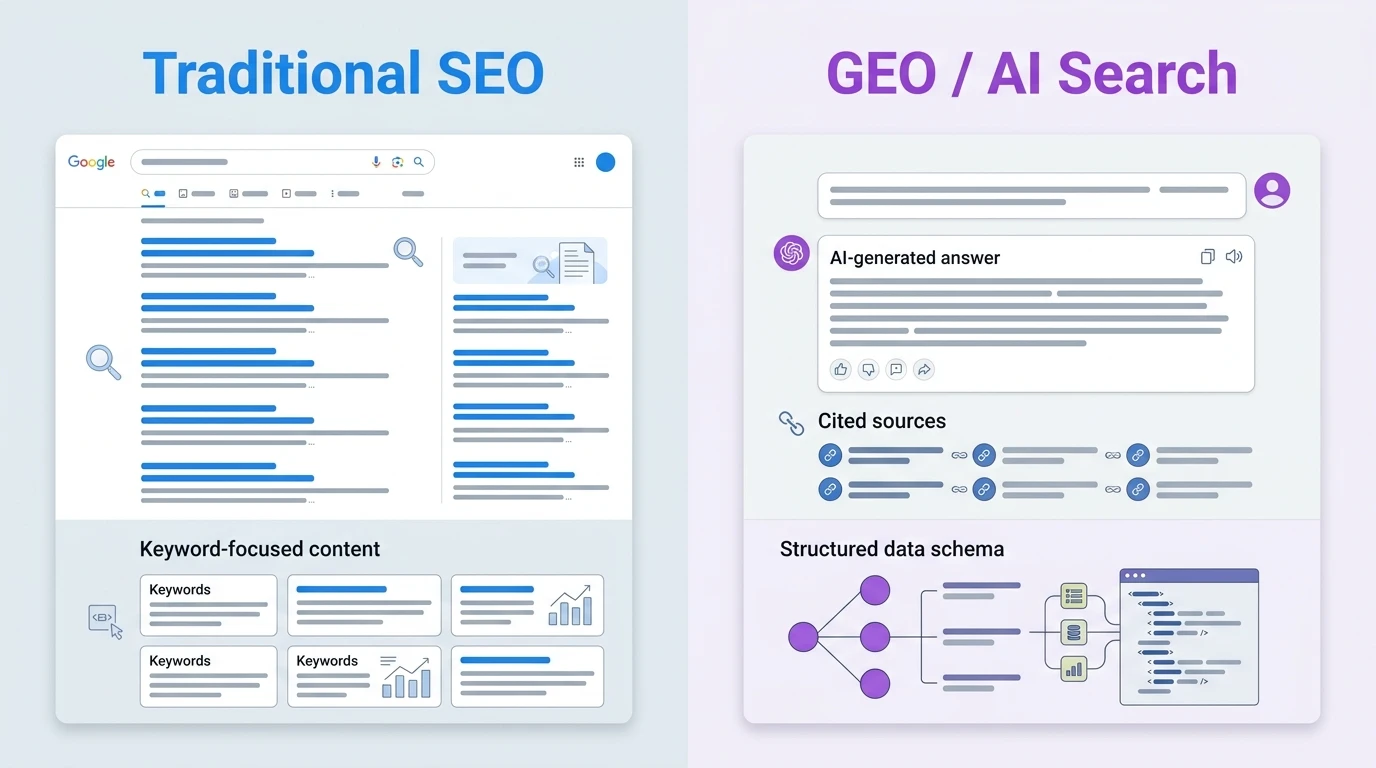
Traditional SEO vs. AI Search (GEO): Structuring your supply chain content so both human buyers and LLMs cite your business first.
Staged Pipeline Engineering: From £300/£1k+ static HTML foundations to automated multi-channel lead capture.
People Also Ask • UK SERP Verified
Frequently Asked Questions: Supply Chain Leads UK
Fact-checked answers to the most common questions asked by UK supply chain leaders regarding lead costs, website foundations, AI search, and pipeline ROI.
The highest-ROI approach is a staged foundation-first model. Start in Stage 1 by building a fast, static HTML website engineered around exact UK search intent and AI Search (GEO) from £300 (plus £50/month hosting, SEO & content) or £1,000+ for a full Conversion Engine. Once your pages convert visitors at 3.5%–5%+, scale Stage 2 content clusters (£150 for 10 SEO/GEO articles) and Stage 3 Google Search PPC (from £750/month) and AI qualification agents.
In the UK market, Google Ads click costs for Supply Chain keywords average around £6.40 per click, translating to £45–£180 per paid enquiry depending on landing page conversion rate. Shared directory leads cost £30–£90 but close at just 5%–7% because they are sold to multiple competitors. Owned organic and AI Search (GEO) leads generated through a purpose-built static website typically bring blended cost-per-lead down to £18–£45 over 6–12 months with a 25%+ close rate.
Sending £1,500+/month of paid traffic to a slow, generic brochure website leaks up to 70% of potential enquiries. Moreover, over a third of UK buyers now use ChatGPT, Perplexity, and Google AI Overviews to shortlist Supply Chain suppliers. By building a 100/100 Lighthouse static HTML site with JSON-LD entity schema, /llms.txt, and direct-answer architecture first, every future pound spent on SEO, PPC, or outbound converts at 2x–3x the industry average.
For UK Supply Chain businesses targeting Operations Directors, Procurement Managers, Chief Engineers, Supply Chain Directors, Quality Assurance Heads, and Technical Buyers, succeeding with 'What are the 5 pillars of SCM' requires aligning your website's service pages with commercial search intent, displaying verified credentials (ISO 9001 / ISO 14001, UKCA Marking, HSE Workplace Regulations, UKAS Accreditation, FSA / HACCP, and UK GDPR), and combining inbound SEO/GEO authority with rapid under-60-second enquiry follow-up.
For UK Supply Chain businesses targeting Operations Directors, Procurement Managers, Chief Engineers, Supply Chain Directors, Quality Assurance Heads, and Technical Buyers, succeeding with 'What is lead time vs delivery time' requires aligning your website's service pages with commercial search intent, displaying verified credentials (ISO 9001 / ISO 14001, UKCA Marking, HSE Workplace Regulations, UKAS Accreditation, FSA / HACCP, and UK GDPR), and combining inbound SEO/GEO authority with rapid under-60-second enquiry follow-up.
For UK Supply Chain businesses targeting Operations Directors, Procurement Managers, Chief Engineers, Supply Chain Directors, Quality Assurance Heads, and Technical Buyers, succeeding with 'What is the lowest position in logistics' requires aligning your website's service pages with commercial search intent, displaying verified credentials (ISO 9001 / ISO 14001, UKCA Marking, HSE Workplace Regulations, UKAS Accreditation, FSA / HACCP, and UK GDPR), and combining inbound SEO/GEO authority with rapid under-60-second enquiry follow-up.
Explore Adjacent Playbooks
Related Manufacturing, Engineering & Supply Chain Guides
Get Your Free Supply Chain Website, AI Search & Lead Pipeline Audit
Tell us where your business is right now. We'll review your current website speed, UK search-intent gaps, and AI Search (GEO) visibility—and recommend the exact Stage 1, 2, or 3 plan for your budget.