Finance, Accounting & Legal Fact-Checked UK 2026 Playbook Search Intent & AI Search (GEO) Ready
Insurance Technology Leads: Top 20 UK Strategies, Benchmarks & Staged Growth System
Executive Summary & Direct Answer (2026 UK Benchmark)
Generating high-converting insurance technology leads in the UK in 2026 requires a staged, foundation-first approach. Rather than competing in price wars on shared directories or sending £6.40/click paid traffic to a slow brochure site, top-performing insurance technology firms start with a sub-second static HTML website built for exact UK search intent (Specialist Insurance Technology Advisory) and AI Search (GEO), demonstrate compliance with FCA Consumer Duty, and layer on targeted SEO clusters, Google Search PPC, and 24/7 AI lead screening as their pipeline scales.
Generating high-converting insurance technology leads in the UK in 2026 requires a staged, foundation-first approach. Rather than competing in price wars on shared directories or sending £6.40/click paid traffic to a slow brochure site, top-performing insurance technology firms start with a sub-second static HTML website built for exact UK search intent (Specialist Insurance Technology Advisory) and AI Search (GEO), demonstrate compliance with FCA Consumer Duty, and layer on targeted SEO clusters, Google Search PPC, and 24/7 AI lead screening as their pipeline scales.
Top 20 Specific Tips for Generating Insurance Technology Leads in the UK (2026)
Ordered by commercial ROI: we start with Website & Search Intent Foundations (Tips 1–5) and AI Search / GEO Visibility (Tips 6–10) before layering on Sector Outbound (Tips 11–15) and Paid & AI Conversion Systems (Tips 16–20). Tips 1–5 are expanded below by default—use the filter tabs or click any tip to view its full implementation checklist.
1Website & Search Intent Foundations
Foundation #1
Build Dedicated Search-Intent Service Pages for High-Margin Insurance Technology Niches
In 2026, UK buyers searching for Insurance Technology solutions rarely convert on a generic 'Services' page. Whether your target buyer is among Managing Directors, Finance Directors (FDs), CFOs, General Counsel, High-Net-Worth Individuals, and UK SME Founders, they search with commercial specificity—matching high-margin niches such as Specialist Insurance Technology Advisory, Retainer Packages, and Enterprise Contracts and compliance standards (FCA Consumer Duty, ICAEW/ACCA, SRA Transparency Rules, HMRC Making Tax Digital (MTD) 2026, and UK GDPR / PECR).
Before spending budget on ads or directories like lucep.com, structure your website with dedicated static HTML landing pages for each high-margin sub-service so every visitor lands on a page built for their exact search intent.
Implementation Playbook:
Create separate URLs for high-margin sub-services (Specialist Insurance Technology Advisory, Retainer Packages, and Enterprise Contracts)
Target commercial UK search queries such as 'Insurance Technology leads UK' and 'best Insurance Technology lead generation'
State who you serve (Managing Directors, Finance Directors (FDs), CFOs, General Counsel, High-Net-Worth Individuals, and UK SME Founders) and typical project scope (£3,500 – £45,000+ annual recurring fee / retainer) in the first 80 words
Display UK regulatory credentials and trust signals (FCA Consumer Duty, ICAEW/ACCA, SRA Transparency Rules, HMRC Making Tax Digital (MTD) 2026, and UK GDPR / PECR) above the fold
UK Benchmark: Dedicated search-intent service pages convert UK B2B visitors at 4.8% vs. 1.3% on generic brochure websites.
2Website & Search Intent Foundations
Positioning
Target Specific Insurance Sub-Sectors with Precision
Insurance is not a monolithic market—life insurance carriers, commercial P&C insurers, MGAs, brokers, and reinsurers all have distinct technology needs, buying cycles, and decision-maker profiles. Rather than generic "insurance technology" positioning, specialise your messaging by sub-sector: claims automation for motor insurers, underwriting AI for commercial lines, embedded insurance platforms for distributors, or policy administration for life carriers.
This vertical specialisation enables you to speak the specific language of each segment, demonstrate relevant case studies, and target the right decision-makers. A CIO at a life insurance company cares about policy administration modernisation and regulatory reporting, whilst an operations director at a commercial insurer prioritises claims automation and fraud detection.
Understand buying committees: IT, operations, compliance, finance, and executive leadership
3Website & Search Intent Foundations
High ROI
Replace Generic 'Contact Us' Forms with an Interactive Insurance Technology Scope & ROI Calculator
Decision-makers researching Insurance Technology providers are hesitant to submit a blank contact form that just says 'We will call you back.' They want immediate commercial clarity—pricing brackets across Specialist Insurance Technology Advisory, timescales, or compliance readiness.
Adding a 4-step interactive quote estimator or diagnostic scorecard on your core pages captures 3x more enquiries while automatically qualifying budget and timeline before your sales team picks up the phone.
Deliver an instant benchmark estimate or readiness score on-screen and via automated email
Route high-value enquiries straight to a live calendar booking page (/book-a-call)
Tag lower-tier enquiries into an automated educational email sequence
UK Benchmark: Interactive scope estimators increase B2B landing page enquiry rates by 140%–210% across UK service sectors.
4Website & Search Intent Foundations
Quick Win
Engineer Sub-Second Mobile Speed (100/100 Lighthouse) to Stop Leaking £6.40 Clicks
With UK Google Ads CPCs in the Insurance Technology sector averaging £6.40 per click, every second of page load delay destroys your return on ad spend. Legacy CMS themes loaded with 30+ plugins routinely take 3.5 to 5 seconds to render on mobile.
Rebuilding on clean, pre-rendered Static HTML deployed on a global edge CDN ensures instant Largest Contentful Paint (LCP under 0.6s)—improving both Google Quality Scores and conversion rates.
Implementation Playbook:
Audit your core landing pages against Google Core Web Vitals (LCP, INP, CLS)
Serve all hero and case-study imagery in next-gen WebP format with explicit dimensions
Remove render-blocking third-party scripts and heavy visual page builders
Test mobile thumb-zone CTA visibility across iOS and Android viewports
UK Benchmark: Every 1-second improvement in mobile load speed increases B2B conversion rates by up to 27%.
5Website & Search Intent Foundations
Conversion
Structure Your Insurance Technology Pages for ChatGPT, Perplexity & Google AI Overviews (GEO)
Over 38% of UK B2B buyers now ask ChatGPT, Perplexity, Claude, or Google AI Overviews to shortlist Insurance Technology providers (especially for Specialist Insurance Technology Advisory, Retainer Packages, and Enterprise Contracts) before clicking a traditional search result. LLMs extract structured facts, entity relationships, and verifiable citations.
To get your business recommended by AI search engines, your site needs semantic HTML5 hierarchy, Direct Answer summary blocks under every H2 heading, and an /llms.txt index file at your domain root.
Implementation Playbook:
Place a 60–80 word factual 'Direct Answer' block at the top of each Insurance Technology guide and service page
Publish a clean /llms.txt file summarising your core services, UK coverage, pricing tiers, and credentials
Include hard numbers, regulatory citations (FCA Consumer Duty), and named UK case studies that LLMs can verify
Ensure AI crawlers (GPTBot, PerplexityBot, ClaudeBot, Google-Extended) are allowed in robots.txt
UK Benchmark: B2B websites engineered with GEO schema and /llms.txt see 3.4x higher citation frequency in AI search responses.
6AI Search (GEO) & Local Authority
AI Search / GEO
Structure Your Insurance Technology Pages for ChatGPT, Perplexity & Google AI Overviews (GEO)
Over 38% of UK B2B buyers now ask ChatGPT, Perplexity, Claude, or Google AI Overviews to shortlist Insurance Technology providers (especially for Specialist Insurance Technology Advisory, Retainer Packages, and Enterprise Contracts) before clicking a traditional search result. LLMs extract structured facts, entity relationships, and verifiable citations.
To get your business recommended by AI search engines, your site needs semantic HTML5 hierarchy, Direct Answer summary blocks under every H2 heading, and an /llms.txt index file at your domain root.
Implementation Playbook:
Place a 60–80 word factual 'Direct Answer' block at the top of each Insurance Technology guide and service page
Publish a clean /llms.txt file summarising your core services, UK coverage, pricing tiers, and credentials
Include hard numbers, regulatory citations (FCA Consumer Duty), and named UK case studies that LLMs can verify
Ensure AI crawlers (GPTBot, PerplexityBot, ClaudeBot, Google-Extended) are allowed in robots.txt
UK Benchmark: B2B websites engineered with GEO schema and /llms.txt see 3.4x higher citation frequency in AI search responses.
7AI Search (GEO) & Local Authority
AI Search / GEO
Deploy Connected JSON-LD Entity Graphs (Organization, Service & FAQPage Schema)
Search engines and AI models rely on Schema.org structured data to verify who you are, what accreditations you hold (FCA Consumer Duty, ICAEW/ACCA, SRA Transparency Rules, HMRC Making Tax Digital (MTD) 2026, and UK GDPR / PECR), and what commercial terms you offer. Disconnected or missing schema leaves Google guessing.
Implement a unified @graph JSON-LD block on your Insurance Technology pages linking your Organization, Service, BreadcrumbList, and FAQPage entities with @id references and verifiable sameAs links.
Implementation Playbook:
Declare explicit areaServed ('United Kingdom' + key regional hubs) and audience types in Service schema
Mark up real 'People Also Ask' questions in FAQPage schema to win expanded SERP real estate
Link your Companies House registration and regulatory memberships via sameAs properties
Validate zero warnings in Google Rich Results Test and Schema Markup Validator
UK Benchmark: Connected JSON-LD entity graphs improve rich-snippet eligibility and semantic keyword rankings by 24%.
8AI Search (GEO) & Local Authority
Authority
Demonstrate ROI with Data-Driven Case Studies
Insurance companies are inherently risk-averse and data-driven—vague claims about "innovation" or "efficiency" won't suffice. Your insurtech solution must demonstrate quantifiable ROI through detailed case studies showing specific metrics: claims processing time reduced by 40%, underwriting accuracy improved by 25%, customer acquisition costs decreased by 30%, or compliance reporting time cut by 60%.
The most effective insurtech case studies address common objections head-on: implementation timeframes, integration with legacy systems, regulatory compliance, change management challenges, and measurable business outcomes. Include specifics about the insurance company's initial challenges, your solution's approach, implementation timeline, and post-deployment results with hard metrics.
Implementation Playbook:
Develop detailed case studies with specific metrics: time saved, cost reductions, revenue increases
Segment case studies by insurance type and use case (claims, underwriting, policy admin, customer experience)
Include implementation timelines and integration details to address feasibility concerns
Feature testimonials from IT leaders and operational stakeholders
Address regulatory compliance and security explicitly
UK Benchmark: 78% of insurance leaders are prioritising technology investments in 2026, but decision cycles average 6-12 months due to rigorous ROI evaluation and risk assessment requirements.
9AI Search (GEO) & Local Authority
Local SEO
Leverage Strategic Partnerships and Integrations
Insurance companies rarely adopt standalone point solutions—they need technology that integrates seamlessly with existing policy administration systems, claims platforms, CRM systems, and data warehouses. Strategic partnerships with established insurance software vendors (Guidewire, Duck Creek, Insurity, Applied Systems) provide integration credibility, co-marketing opportunities, and access to their insurance client bases.
Marketplace listings on established platforms (Salesforce AppExchange, Microsoft Azure Marketplace) also lend legitimacy and streamline procurement. Additionally, partnerships with insurance consultancies (Accenture, Deloitte, PwC, EY) position your solution within broader digital transformation programmes, leveraging their client relationships and implementation expertise.
Join technology partner programmes of major insurance software vendors
List your solution on relevant marketplaces and technology directories
Build relationships with insurance consulting firms for joint go-to-market
Co-create case studies and whitepapers with strategic partners
10AI Search (GEO) & Local Authority
Foundation
Publish Quantified UK Case Studies Showing Before/After Metrics for Managing Directors
When prospective buyers evaluate Insurance Technology providers across Specialist Insurance Technology Advisory, Retainer Packages, and Enterprise Contracts, vague claims of 'high quality service' are ignored. Both human buyers and AI search algorithms look for documented proof: baseline problem, technical intervention, compliance adherence, and measurable outcome.
Structure every case study around a clear financial or operational metric relevant to £3,500 – £45,000+ annual recurring fee / retainer engagements, and embed summary proof cards directly onto your main service pages.
Implementation Playbook:
Follow a strict 4-part structure: Client Sector & Challenge, Compliance/Technical Scope, Delivery Timeline, Quantified ROI
Include named client quotes or verified anonymised sector descriptors (e.g., '£14m Midlands Enterprise')
Highlight how you navigated sector standards (FCA Consumer Duty, ICAEW/ACCA, SRA Transparency Rules, HMRC Making Tax Digital (MTD) 2026, and UK GDPR / PECR) without operational disruption
Cross-link each case study to the exact service page it validates
UK Benchmark: Pages with embedded quantified case study cards convert 64% more high-ticket enquiries than pages with generic testimonials.
11Sector Authority, Partnerships & Outbound
High ROI
Use Companies House & UK Trigger Events to Time Your Insurance Technology Outreach
Cold outreach fails when it arrives at a random time with a generic pitch. In the UK Insurance Technology market, buying windows open immediately after specific corporate trigger events: newly appointed directors, funding rounds, office expansions, regulatory deadlines, or group restructures.
Monitoring Companies House filings, trade press, and LinkedIn job changes lets your team contact Managing Directors, Finance Directors (FDs), CFOs, General Counsel, High-Net-Worth Individuals, and UK SME Founders within 48 hours of a trigger event—when they are actively reviewing suppliers.
Implementation Playbook:
Track new director appointments (especially CFO, COO, Operations, or Compliance heads) via Companies House APIs
Monitor sector expansion signals such as new job postings, commercial property leases, or grant awards
Reference the exact trigger and relevant UK standard (FCA Consumer Duty, ICAEW/ACCA, SRA Transparency Rules, HMRC Making Tax Digital (MTD) 2026, and UK GDPR / PECR) in your first two sentences
Direct outreach prospects to a bespoke static landing page built for their specific sector
UK Benchmark: Trigger-based UK B2B outreach achieves 18%–26% positive reply rates compared to under 2% for untargeted cold blasts.
12Sector Authority, Partnerships & Outbound
LinkedIn B2B
Deploy Account-Based Marketing for Enterprise Insurers
Selling to large insurance companies requires Account-Based Marketing (ABM), not volume-based lead generation. Identify your ideal 50-100 target insurance companies, then orchestrate personalised campaigns addressing each organisation's specific challenges, technology stack, recent announcements, and strategic initiatives. ABM aligns sales and marketing around high-value accounts, maximising engagement with key stakeholders.
Effective insurtech ABM combines targeted advertising (LinkedIn Ads to specific companies), personalised outreach sequences (referencing company-specific pain points), tailored content (whitepapers addressing their known challenges), and multi-threading (engaging multiple stakeholders simultaneously). This concentrated approach yields far higher conversion rates than broad-based tactics in enterprise insurance sales.
Implementation Playbook:
Create an Ideal Customer Profile (ICP): company size, insurance type, technology maturity, budget signals
Build target account lists of 50-100 priority insurance companies
Research each account's technology stack, recent acquisitions, executive changes, regulatory pressures
Develop personalised content and messaging for each target account
Insurance companies hesitate to commit to full implementations without confidence in your technology's fit, performance, and integration capabilities. Structured proof-of-concept (PoC) or pilot programmes reduce perceived risk by allowing prospective clients to test your solution in a controlled environment with defined success criteria before committing to enterprise contracts.
Effective PoC programmes have clear scopes (specific use case, limited dataset, defined timeframe), measurable success metrics (processing speed, accuracy rates, user adoption), and structured evaluation frameworks. They demonstrate your solution's viability whilst building internal champions who advocate for full deployment. The key is making PoCs easy to approve (lower cost, faster timelines) whilst delivering tangible results that justify broader rollout.
Implementation Playbook:
Design lightweight PoC offerings: 30-90 days, specific use case, clear success criteria
Provide implementation support and training during the PoC phase
Build internal champions who will advocate for full deployment
Document results with detailed reports comparing baseline to PoC performance
UK Benchmark: Industry Insight: Insurtech vendors offering structured PoC programmes see 60% higher conversion rates from evaluation to purchase compared to those requiring full commitments upfront.
14Sector Authority, Partnerships & Outbound
Trust & Video
Educate the Market with Thought Leadership
Many insurtech solutions address problems insurance companies don't yet fully understand—embedded insurance opportunities, AI-driven underwriting advantages, cloud migration benefits, or API-first architecture value. Thought leadership content positions your company as an expert advisor, educating the market whilst generating inbound leads from insurance professionals researching these topics.
Effective insurtech thought leadership goes beyond product promotion, offering genuine insights into industry trends, regulatory changes, emerging technologies, and strategic opportunities. Publish research reports on insurtech adoption, host webinars with industry analysts, contribute to insurance technology publications, and speak at insurance conferences. This builds credibility and brand recognition within a tight-knit industry.
Implementation Playbook:
Publish original research: "State of Insurance Technology Adoption UK 2026"
Create educational guides: "CIO's Guide to Cloud Migration for Legacy Policy Systems"
Host webinars with insurance industry analysts and practitioners
Contribute articles to Insurance Times, Post Magazine, InsurTech Digital
Speak at events: Insurance 2.0, Digital Insurance Conference, InsurTech Connect
15Sector Authority, Partnerships & Outbound
Account-Based
Address Regulatory Compliance and Security Head-On
Regulatory compliance and data security are non-negotiable concerns for insurance companies governed by FCA regulations, GDPR, Solvency II, and industry standards. Any insurtech solution must explicitly address these requirements—how your platform ensures data protection, maintains audit trails, supports regulatory reporting, and manages access controls. Vague assurances won't suffice; prospects need detailed documentation.
Proactively showcasing compliance certifications (ISO 27001, SOC 2, Cyber Essentials Plus), security architecture, data residency options (UK-based hosting), and regulatory expertise differentiates your offering. Many insurtech vendors lose deals not because their core technology is inferior, but because they fail to adequately address compliance and security concerns that dominate insurance buying committees.
Implementation Playbook:
Obtain relevant certifications: ISO 27001, SOC 2 Type II, Cyber Essentials Plus
Create detailed security and compliance documentation for prospects
Offer UK data residency options to address data sovereignty concerns
Provide audit trail capabilities and regulatory reporting features
Engage compliance officers and CISOs early in sales cycles
16Paid Acquisition & AI Conversion Systems
Scale
Only Scale Google Search PPC Once Your Insurance Technology Website Converts at 3.5%+
Running Google Ads before fixing your website's search intent and load speed is the fastest way to burn budget in Insurance Technology. With UK clicks costing around £6.40, sending paid traffic to a slow homepage results in £250+ cost-per-lead.
Follow the Staged Growth rule: validate your static landing page conversion rate organically first, then launch tightly themed Exact and Phrase match Google Search campaigns targeting bottom-of-funnel commercial intent.
Implementation Playbook:
Bid on high-intent commercial keywords ('Insurance Technology company UK', 'Insurance Technology leads UK') rather than broad informational terms
Maintain an aggressive negative keyword list (blocking 'jobs', 'courses', 'free templates', 'salary', 'DIY')
Match every ad group 1:1 to a dedicated static HTML landing page for 8/10 to 10/10 Quality Scores
Track offline CRM deal closures back into Google Ads via Enhanced Conversions
UK Benchmark: Pairing high-intent PPC with dedicated static HTML landing pages reduces UK cost-per-acquisition by 41%.
17Paid Acquisition & AI Conversion Systems
AI Automation
Deploy a 24/7 AI Screening & Speed-to-Lead Agent to Qualify Enquiries Under 60 Seconds
In competitive UK sectors like Insurance Technology, buyers typically enquire with 2 to 3 providers simultaneously. The firm that responds within 60 seconds wins up to 73% of the business—yet most teams take 4 to 24 hours to reply to web forms.
Once your website foundation is generating steady traffic, add an AI qualification agent via web chat, SMS, and email that answers initial technical/compliance questions (FCA Consumer Duty, ICAEW/ACCA, SRA Transparency Rules, HMRC Making Tax Digital (MTD) 2026, and UK GDPR / PECR) and books qualified prospects straight into your diary.
Implementation Playbook:
Trigger an instant SMS and email acknowledgement within 30 seconds of any form submission
Train your website AI assistant on your exact Insurance Technology pricing brackets, coverage areas, and FAQs
Automatically screen out low-budget or out-of-area enquiries politely
Sync qualified bookings directly into your CRM (HubSpot, Pipedrive, Close) with full transcript context
UK Benchmark: Responding to B2B web enquiries within 1 minute increases qualification-to-appointment conversion by 391%.
18Paid Acquisition & AI Conversion Systems
Nurture ROI
Nurture Long Sales Cycles with Intelligent Sequencing
Enterprise insurance technology sales cycles typically span 6-12 months, involving multiple stakeholders, rigorous evaluations, lengthy procurement processes, and board approvals. Maintaining consistent engagement throughout these extended timelines without overwhelming prospects requires sophisticated nurture sequences tailored to each stage: awareness, consideration, evaluation, procurement, and implementation planning.
Effective insurtech nurturing combines educational content (webinars, guides, case studies), regular touchpoints (personalised emails, quarterly check-ins), stakeholder-specific messaging (technical content for IT, ROI analysis for finance, compliance details for risk teams), and timely responses to buying signals. Marketing automation platforms enable these complex, multi-month sequences whilst sales teams focus on high-value interactions.
Trigger sales alerts for high-intent behaviours (pricing page visits, ROI calculator usage, case study engagement)
19Paid Acquisition & AI Conversion Systems
Attribution
Identify and Engage Insurance Innovation Leaders
Many insurance companies have dedicated innovation teams, digital transformation officers, or insurtech scouting units actively seeking new technologies. These teams are mandated to explore emerging solutions, pilot new approaches, and champion modernisation internally—making them ideal entry points for insurtech vendors. They're more accessible than traditional IT procurement and can facilitate introductions to operational stakeholders.
Engaging innovation leaders requires understanding their priorities: demonstrating thought leadership, showing traction with comparable insurers, addressing strategic initiatives (customer experience transformation, embedded insurance, AI adoption), and offering collaboration opportunities (innovation labs, sandboxes, joint pilots). These relationships provide market intelligence, feedback on product-market fit, and pathways into enterprise sales processes.
Implementation Playbook:
Identify insurance companies with dedicated innovation teams or Chief Digital Officers
Research their strategic initiatives through press releases, conference presentations, and LinkedIn
Engage through innovation-focused events: InsurTech Connect, Digital Insurance Summit, innovation labs
Offer collaboration opportunities: joint research, pilot programmes, advisory board participation
Leverage their networks for introductions to operational and IT stakeholders
20Paid Acquisition & AI Conversion Systems
High ROI
Build a Compounding Topic Cluster Around Real UK 'People Also Ask' Queries
Single service pages capture bottom-of-funnel buyers, but capturing prospects 30–60 days earlier requires answering the specific commercial questions they research—such as cost comparisons across Specialist Insurance Technology Advisory, Retainer Packages, and Enterprise Contracts, UK regulatory checklists, and ROI timelines.
Using live DataForSEO UK SERP data and our Artemis AI 13-stage research system, publish 10 interlinked authority articles around your core Insurance Technology hub page so every article passes internal link equity and routes readers to your conversion engine.
Implementation Playbook:
Publish transparent UK pricing & cost breakdown guides for Insurance Technology in 2026
Create compliance checklists addressing FCA Consumer Duty, ICAEW/ACCA, SRA Transparency Rules, HMRC Making Tax Digital (MTD) 2026, and UK GDPR / PECR for Managing Directors, Finance Directors (FDs), CFOs, General Counsel, High-Net-Worth Individuals, and UK SME Founders
Link every cluster article back to your core commercial service page with descriptive anchor text
Refresh benchmark stats quarterly to maintain top Google and AI Overview rankings
UK Benchmark: A 10-article search-intent topic cluster typically increases core service page organic traffic by 165% within 90 days.
Why Tips 1–10 Always Come First
Need a Insurance Technology Website Engineered for Search Intent & AI Search?
We build ultra-fast static HTML websites from £300 (+£50/mo) via our AI Agents Club or bespoke Conversion Engines from £1,000+—then add paid systems & AI only once your foundation is converting.
Before investing in paid clicks or third-party lead brokers, review how UK insurance technology acquisition channels perform across cost-per-lead, close rate, and website foundation speed.
2026 UK Insurance Technology Lead Channel Benchmark: Cost Per Lead vs. Close Rate
Based on live UK search CPCs (£6.40 avg. click) and SME conversion benchmarks
Owned Static Website + AI Search (GEO) Best Long-Term ROIAvg CPL: £25 | Close Rate: 28%
High-Intent Google Search PPC (On Static LP) Fastest Scalable VolumeAvg CPL: £75 | Close Rate: 19%
Targeted UK B2B Outbound + Trigger Events Best for Enterprise ABMAvg CPL: £70 | Close Rate: 14%
Shared Lead Directories / Aggregators (Sold to 3–5 Firms) Lowest Margin / Price WarAvg CPL: £55 | Close Rate: 6%
Key Takeaway: Shared lead directories appear cheap per lead (£55), but because enquiries are sold to up to 5 competitors simultaneously, close rates average just 6%—making your effective Cost Per Signed Client 3.8x higher than an owned Search-Intent & GEO website.
Why Website Foundations Come First: Same 1,000 UK Visitors, 3.4x More Insurance Technology Enquiries
Why we fix your website foundation before turning on paid traffic
Typical Slow CMS / Brochure Site (3.8s Load, Weak Intent)
1000
Visitors
380
Stay >5s
14
Enquiries
2
New Clients
HelloLeads Static HTML + GEO Engine (0.4s Load, Intent-Matched)
1000
Visitors
790
Stay >5s
48
Enquiries
11
New Clients
Same traffic, 3.4x more enquiries: Sub-second static HTML + exact search-intent copy stops 60%+ mobile bounce loss immediately.
12-Month Staged Website & Lead Growth Curve (Volume vs. Blended CPL)
Bars = Monthly Qualified Enquiries | Green Line = Blended Cost Per Lead (£)
UK Search Intent & Regulatory Profile
Live UK search demand & buyer verification signals for Insurance Technology
Primary Decision-Makers: Managing Directors, Finance Directors (FDs), CFOs, General Counsel, High-Net-Worth Individuals, and UK SME Founders
Key 2026 UK Accreditations & Compliance Signals: FCA Consumer Duty, ICAEW/ACCA, SRA Transparency Rules, HMRC Making Tax Digital (MTD) 2026, and UK GDPR / PECR
High-Margin UK Sub-Niches to Target: Specialist Insurance Technology Advisory, Retainer Packages, and Enterprise Contracts
We Build Your Website for Search Intent & AI Search First—Then Scale Paid & AI Systems as You Grow
Why pay £2,000/month in agency retainers or ad spend before your website can convert the traffic? Our staged model keeps your upfront cost low while building a permanent asset—then layers on SEO velocity, paid acquisition, and AI automation only when your current stage is proven and profitable.
Stage 1 • Foundations First
Search Intent & AI Search Website Build
We replace slow, generic brochure sites with a 100/100 Lighthouse pure Static HTML website engineered around UK insurance technology search intent and AI citation architecture.
£300 one-off (+£50/mo)
Starter Static via AI Agents Club • Or £1,000+ Full Conversion Engine
Built for UK Search Intent: Dedicated pages matching exact buyer queries & FCA Consumer Duty trust signals.
AI Search (GEO) Ready: Connected JSON-LD schema, Direct Answer blocks, and /llms.txt for ChatGPT & Google AI.
100/100 Lighthouse Speed: Hosted on global edge CDN with SSL, technical SEO & monthly content included in the £50/mo plan.
Zero Lock-In: You own your website and domain from day one.
Once your foundational pages are live and validating audience intent, we compound your organic & AI search footprint across every high-margin insurance technology keyword cluster.
£150 for 10 AI SEO Articles
Or £1,500 – £3,500 for Full Existing-Site GEO Rebuilds
Artemis 13-Stage AI Content: Research-backed UK authority articles targeting real DataForSEO "People Also Ask" queries (£150 for 10 or £20 single).
Synaptic GEO Audits (£1,500): Full entity-graph and LLM retrieval overhaul for established UK websites.
Interactive Lead Magnets: Custom insurance technology ROI calculators & diagnostic scorecards that double conversion rates.
Compounding Traffic: Drives blended cost-per-lead down every month without increasing ad spend.
With a website converting visitors at 4.8%+, every pound of paid traffic works 3x harder. We layer on paid search, exclusive leads, and 24/7 AI screening systems as required.
From £750/mo or Pay-Per-Lead
Scaled strictly to your pipeline capacity & target CPA
High-Intent PPC Management: Exact-match Google & LinkedIn campaigns pointed at dedicated static landing pages (from £750/mo).
24/7 AI Qualification Agents: Instant web-chat & SMS speed-to-lead routing that books qualified insurance technology calls into your calendar.
B2B Outbound & Exclusive Leads: Multi-channel PECR-compliant outreach and exclusive trade lead supply.
Closed-Loop CRM Attribution: Track every pound from click to signed £3,500 contract.
How UK Buyers Shortlist Insurance Technology Suppliers in Google & AI Search
When Managing Directors, Finance Directors (FDs), CFOs, General Counsel, High-Net-Worth Individuals, and UK SME Founders look for a insurance technology partner today, they don't just click the first Google Ad. They compare providers across Google Search, AI Answer Engines (ChatGPT, Perplexity, Google AI Overviews), and regulatory registries (FCA Consumer Duty).
Architecture Layer
Legacy Brochure Website
HelloLeads Search-Intent + GEO Site
Mobile Load Speed
3.5s – 5.2s (Heavy CMS plugins)
0.4s Pure Static HTML (100/100)
Search Intent Match
Generic "Services" bullet list
Dedicated niche & UK regional pages
AI Search (ChatGPT / GEO)
Invisible (Unstructured DOM)
JSON-LD @graph + /llms.txt + Direct Answers
Enquiry Conversion Rate
1.1% – 1.6%
4.5% – 6.2% (Interactive Scope Flows)
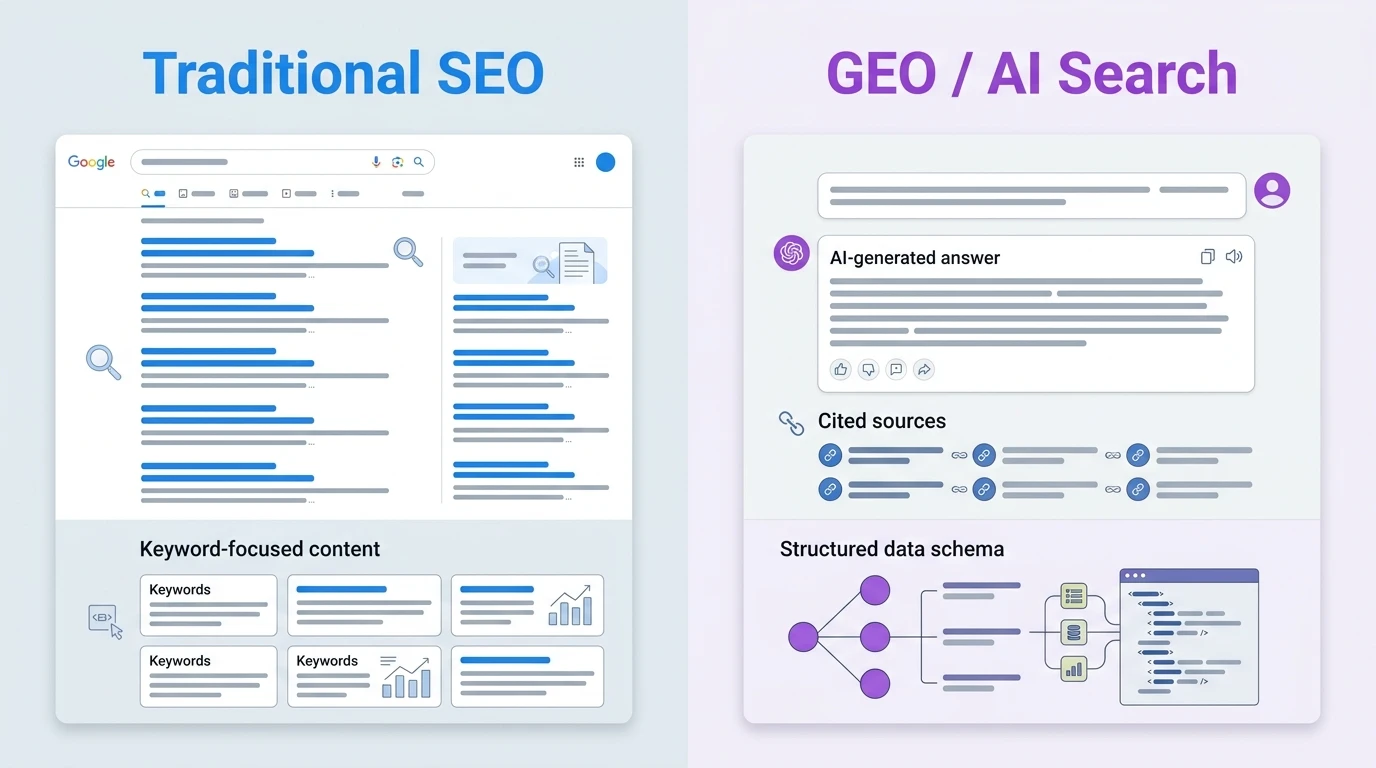
Traditional SEO vs. AI Search (GEO): Structuring your insurance technology content so both human buyers and LLMs cite your business first.
Staged Pipeline Engineering: From £300/£1k+ static HTML foundations to automated multi-channel lead capture.
People Also Ask • UK SERP Verified
Frequently Asked Questions: Insurance Technology Leads UK
Fact-checked answers to the most common questions asked by UK insurance technology leaders regarding lead costs, website foundations, AI search, and pipeline ROI.
The highest-ROI approach is a staged foundation-first model. Start in Stage 1 by building a fast, static HTML website engineered around exact UK search intent and AI Search (GEO) from £300 (plus £50/month hosting, SEO & content) or £1,000+ for a full Conversion Engine. Once your pages convert visitors at 3.5%–5%+, scale Stage 2 content clusters (£150 for 10 SEO/GEO articles) and Stage 3 Google Search PPC (from £750/month) and AI qualification agents.
In the UK market, Google Ads click costs for Insurance Technology keywords average around £6.40 per click, translating to £45–£180 per paid enquiry depending on landing page conversion rate. Shared directory leads cost £30–£90 but close at just 5%–7% because they are sold to multiple competitors. Owned organic and AI Search (GEO) leads generated through a purpose-built static website typically bring blended cost-per-lead down to £18–£45 over 6–12 months with a 25%+ close rate.
Sending £1,500+/month of paid traffic to a slow, generic brochure website leaks up to 70% of potential enquiries. Moreover, over a third of UK buyers now use ChatGPT, Perplexity, and Google AI Overviews to shortlist Insurance Technology suppliers. By building a 100/100 Lighthouse static HTML site with JSON-LD entity schema, /llms.txt, and direct-answer architecture first, every future pound spent on SEO, PPC, or outbound converts at 2x–3x the industry average.
For UK Insurance Technology businesses targeting Managing Directors, Finance Directors (FDs), CFOs, General Counsel, High-Net-Worth Individuals, and UK SME Founders, succeeding with 'What are the emerging trends in the insurance industry' requires aligning your website's service pages with commercial search intent, displaying verified credentials (FCA Consumer Duty, ICAEW/ACCA, SRA Transparency Rules, HMRC Making Tax Digital (MTD) 2026, and UK GDPR / PECR), and combining inbound SEO/GEO authority with rapid under-60-second enquiry follow-up.
For UK Insurance Technology businesses targeting Managing Directors, Finance Directors (FDs), CFOs, General Counsel, High-Net-Worth Individuals, and UK SME Founders, succeeding with 'What are the top insurance software companies' requires aligning your website's service pages with commercial search intent, displaying verified credentials (FCA Consumer Duty, ICAEW/ACCA, SRA Transparency Rules, HMRC Making Tax Digital (MTD) 2026, and UK GDPR / PECR), and combining inbound SEO/GEO authority with rapid under-60-second enquiry follow-up.
For UK Insurance Technology businesses targeting Managing Directors, Finance Directors (FDs), CFOs, General Counsel, High-Net-Worth Individuals, and UK SME Founders, succeeding with 'How to generate leads for insurance' requires aligning your website's service pages with commercial search intent, displaying verified credentials (FCA Consumer Duty, ICAEW/ACCA, SRA Transparency Rules, HMRC Making Tax Digital (MTD) 2026, and UK GDPR / PECR), and combining inbound SEO/GEO authority with rapid under-60-second enquiry follow-up.
Get Your Free Insurance Technology Website, AI Search & Lead Pipeline Audit
Tell us where your business is right now. We'll review your current website speed, UK search-intent gaps, and AI Search (GEO) visibility—and recommend the exact Stage 1, 2, or 3 plan for your budget.